By Fiachra "Figs" O'Sullivan, LMFT and Teale Taxis, LMFT
Certified EFT Therapist and Certified EFT Supervisor (ICEEFT). Co-founders of Empathi, San Francisco.
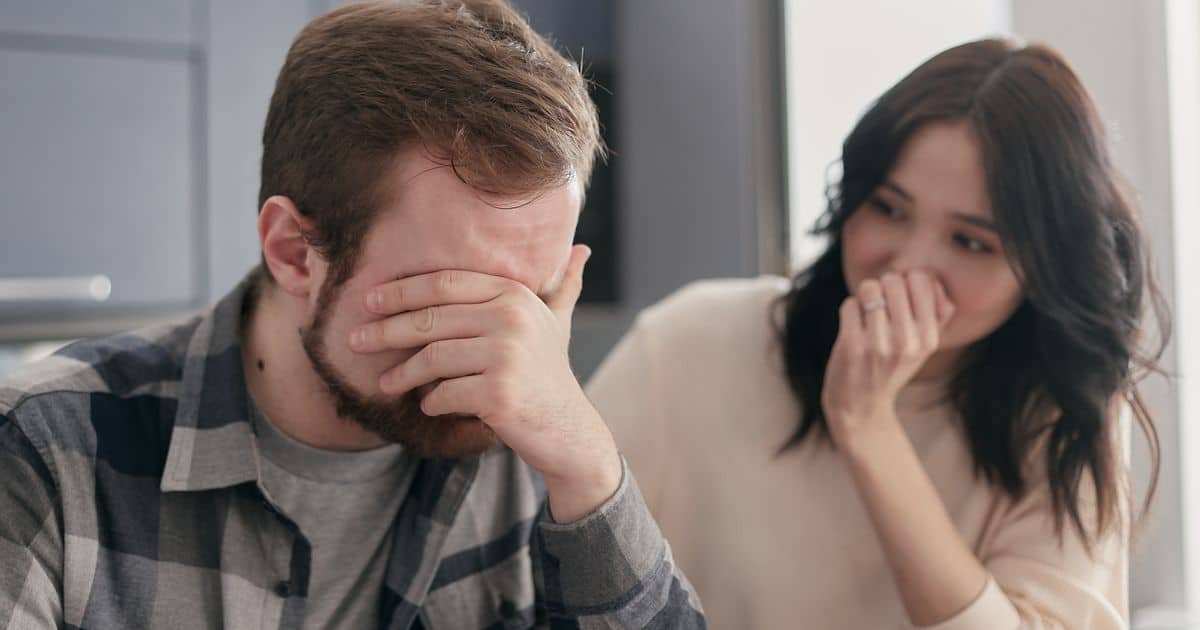
Signs that your partner feels guilty about cheating rarely look like sobbing apologies or dramatic displays of remorse. More often, guilt shows up as emotional withdrawal, defensiveness, or suddenly becoming obsessed with work. They look away and minimize your feelings not because they do not care, but because witnessing your hurt is unbearable proof of what they have become.
If you are searching for answers right now, tell Figlet when you discovered the cheating and how your spouse reacted so you can understand what their emotional withdrawal really means.
Here’s what I see in my office almost every week: partners scanning their cheating spouse for signs of guilt, desperate for proof that they actually care about the damage they’ve done. And here’s the thing that breaks my heart about this whole search – guilt rarely looks the way we expect it to.
Most people think guilt should look like sobbing apologies and dramatic displays of remorse. Sometimes it does. But more often? It looks like your partner suddenly becoming obsessed with work. Or disappearing into video games for hours. Or picking fights about whose turn it is to take out the trash.
The person who cheated starts looking away from you. Not because they don’t care, but because your pain confirms their worst fear about themselves – that they’re fundamentally bad. So they minimize your feelings, not to hurt you more, but because witnessing your hurt is unbearable proof of what they’ve become.
I have a client right now who cheated on his wife eight months ago. When I sit with him, I genuinely worry he might fall apart in my office. The guilt radiates off him. But his wife? She barely sees it because he can’t make eye contact with her pain.
Here are the real signs I watch for:
They withdraw emotionally, not because they don’t feel bad, but because the shame is crushing them. They work late, stay busy, find reasons to avoid being present with the mess they’ve made.
If you are the one who cheated and you recognize yourself here, I wrote about how to deal with guilt after cheating so it turns toward repair instead of hiding.
They get defensive when you bring up the affair. This isn’t necessarily denial – it’s often someone who’s already drowning in self-hatred and can’t take on one more ounce of it.
You search their eyes for proof that they still care.
Do you know you can get personalized answers to all your questions from the same wisdom that wrote this article, right now?
Ask anything about your own situation and get an answer immediately. Keep asking, think it through, work out what to do next.
No credit card required. Your first 10 messages are free.

Ask Figlet about seeing their hidden guilt.
They overcompensate in weird ways. Suddenly doing all the dishes, buying you things, being suspiciously helpful. It’s guilt trying to balance the scales.
They seem almost cold or detached. This is the cruelest one because it looks like they don’t care. But emotional numbing is often how people survive when the shame becomes too big to hold.
Here’s what I need you to understand: someone can be absolutely destroyed by what they’ve done and still not show it in ways that feel satisfying to you. The person who goes silent after cheating isn’t necessarily unrepentant. They might be drowning.
The question isn’t really whether your partner feels guilty. The question is whether they’re willing to stay present with their guilt long enough to do something meaningful with it. Because guilt without action is just self-indulgence. And that’s a completely different conversation.
If you are the one who strayed, I explain what turning guilt into real repair looks like in my piece on surviving an affair from both sides.
If you can’t tell whether your partner’s guilt is turning into real change, talk it through with Figlet. It’s an AI coach that’s there at 2 in the morning, or right now.
Figs is a licensed marriage and family therapist with 16+ years of experience working with couples. He’s the co-founder of Empathi, host of the “Come Here to Me” podcast, and author of an upcoming book on relationships and the systems that shape how we love.
Explore More Topics
Related reading: When Your Partner Makes You Feel Guilty for Having Needs
As you try to make sense of their quiet remorse, tell Figlet what happened when you brought up the betrayal to get guidance on how to navigate this painful gap between you.



Every couple has a pattern they cannot see. Find yours.
In love, each of you is a Relentless or a Reluctant, which makes you one of three kinds of couple: Relentless and Reluctant, two Relentless, or two Reluctant. The free quiz reveals your creatures and the cycle they fall into together. About three minutes.
No signup needed to start.
The Relentless

The Reluctant