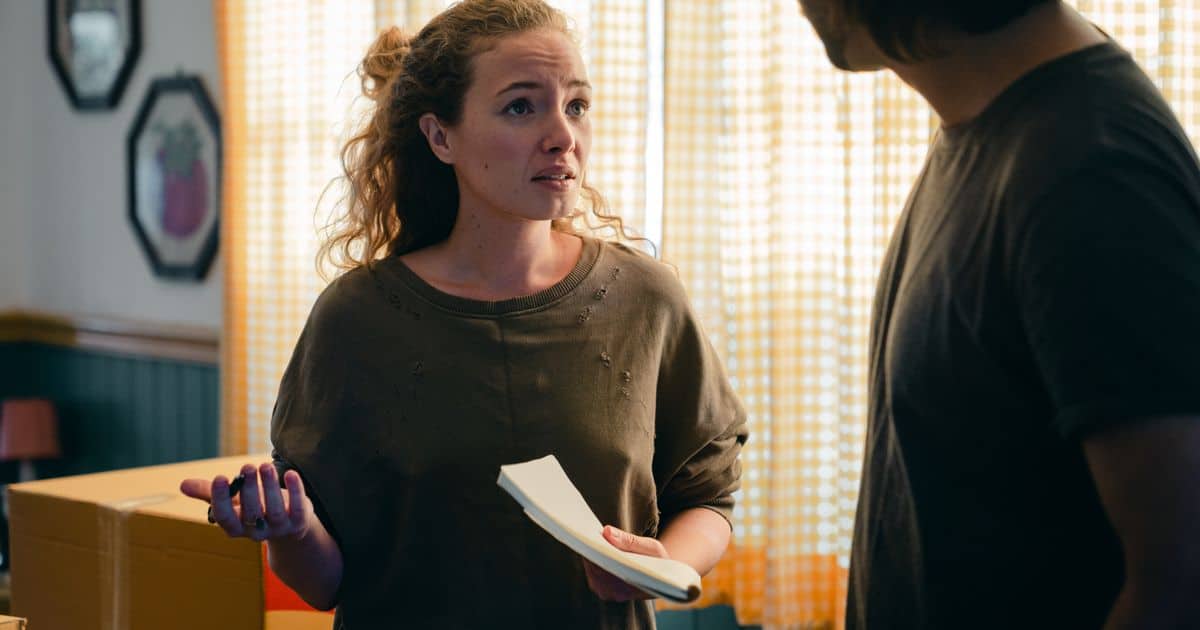
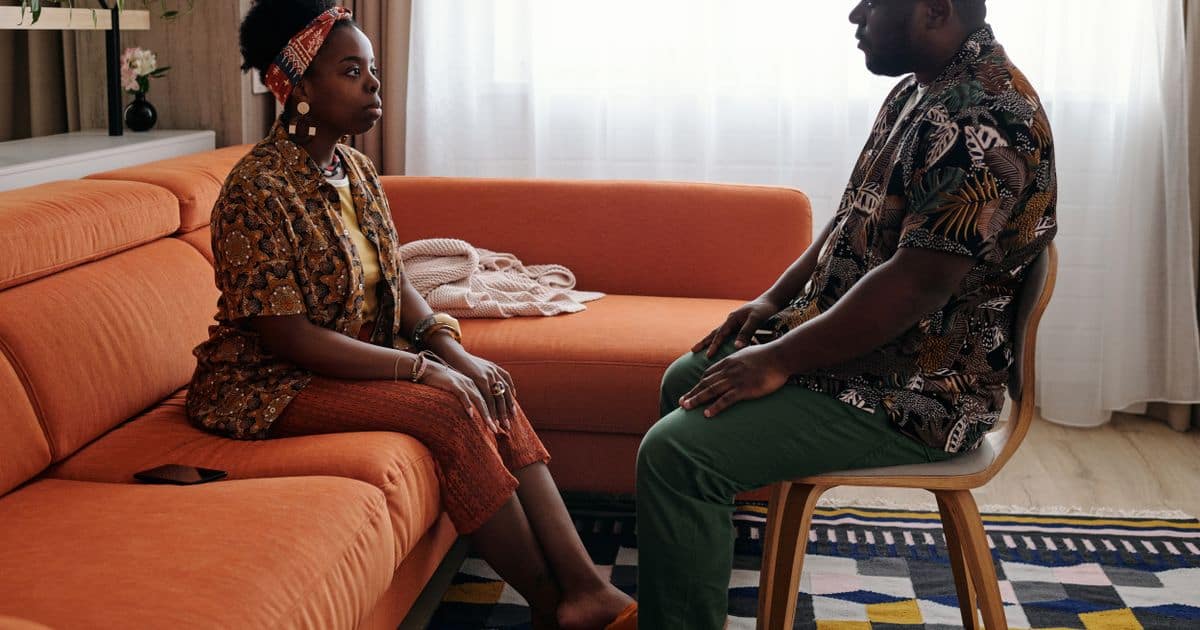
When your husband calls you names in a fight, he has stopped seeing you as someone he loves and started seeing an enemy to defeat. Name calling is not a communication problem. It is a rupture in basic safety: a flooded partner is throwing the hot coals of his own shame and pain at you, and you do not have to catch them. What to do is set a calm boundary that the names stop, and ask for a real apology with no “but you make me so…” attached.
What to do tonight: when the first name lands, stop the conversation, say that you are stopping, say when you will come back, and come back.
Name calling can be verbal abuse. If the names come with fear, threats, blocking the door, breaking things or control, your safety comes first: call the National Domestic Violence Hotline at 1-800-799-7233.
Tell Figlet what your partner called you during your last argument to understand how to protect your emotional safety and stop catching the hurt.
Let me be straight with you about this, because this matters.
Name-calling is one form of a deeper problem. Here is how to handle a disrespectful partner.
Name calling in arguments is not just a communication problem. It is not a “we both need to fight fairer” issue. It is a rupture in basic safety. And without safety, there is no real relationship. There is just two people surviving each other.
Here’s what I know after seventeen years of sitting with couples: when someone calls their partner a name in a fight, something very specific is happening. They have stopped seeing their partner as a person they love who is in pain. They have started seeing them as an enemy to defeat. That’s a significant shift. And it tells me that this person doesn’t yet have the skills to stay in their own skin when they feel flooded, so they reach for a weapon instead.
Now, I want to ask you something, and I want you to really sit with it.
How do you feel after it happens? Not during. After. Because a lot of people I work with minimize this. They say “oh it’s just words” or “they don’t really mean it.” But your nervous system knows the truth. Your body keeps score even when your mind makes excuses.
The name calling is often your partner’s attempt to discharge their own shame and pain by making you carry it instead. It’s like they’re throwing hot coals they can’t hold onto you. But here’s the thing: you don’t have to catch them.
You brace for the words that turn you into an enemy.
Do you know you can get personalized answers to all your questions from the same wisdom that wrote this article, right now?
Ask anything about your own situation and get an answer immediately. Keep asking, think it through, work out what to do next.
No credit card required. Your first 10 messages are free.

Ask Figlet about when words turn cruel.
Here’s what needs to happen. Your partner needs to understand, fully and without defensiveness, that this behavior is non-negotiable. Not as a threat. As a boundary about what a real relationship requires. You cannot do vulnerable, connected work with someone who turns your name into an insult when they feel scared or angry.
This is repairable. But only if your partner owns it completely, without a “but you make me so…” attached to the apology. A real apology looks like: “I called you names. That was wrong. It hurt you. I’m going to figure out what happens inside me that makes me do that, and I’m going to learn different skills.”
If they can’t get there, if they keep justifying or minimizing, then you’re not dealing with someone who’s ready to be in a real relationship yet. And that’s information you need.
The truth is, how someone treats you when they’re angry tells you everything about their character. When the mask comes off in conflict, what’s underneath is what you’re really dealing with every day.
Frequently asked questions

Which pattern is running your relationship?
Take the free three minute quiz and meet the creature behind the cycle you keep getting stuck in.
Does a man love you if he calls you names?
He may love you and still not have the skills to stay in his own skin when he feels flooded, so he reaches for a weapon instead. Love is not the test. How someone treats you when they’re angry shows you what you’re really dealing with every day, and what matters is whether he owns it completely and learns different skills.
How damaging is name-calling in a relationship?
More damaging than most people admit. A lot of people minimize it as “just words,” but your nervous system knows the truth, and your body keeps score even when your mind makes excuses. Without safety there is no real relationship, just two people surviving each other.
Can a marriage recover from name-calling?
Yes, this is repairable, but only if your partner owns it fully. A real apology sounds like: “I called you names. That was wrong. It hurt you. I’m going to figure out what happens inside me that makes me do that.” If he keeps justifying or minimizing, that is information you need.
How do you stop name calling in a relationship?
Make a real agreement together: when either of you hits a certain temperature, you stop, you name that you are stopping, you say when you will come back, and you come back. The return is what separates a healthy pause from abandonment.

If name-calling has become part of how the two of you fight, start now with Figlet. It’s an AI coach that’s there at 2 in the morning, or right now, to help you sort out what is happening and what you need.
Figs is a licensed marriage and family therapist with seventeen years of experience working with couples. He’s the co-founder of Empathi, host of the “Come Here to Me” podcast, and author of an upcoming book on relationships and the systems that shape how we love.
Explore More Topics
Related reading: How to Stop Name Calling in Arguments · What to Do When Your Partner Uses Guilt to Win Arguments
As you reflect on how arguments unfold in your relationship, tell Figlet what words were said and how your body reacted afterward so you can step out of the conflict and rebuild real safety.
Keep Reading



Every couple has a pattern they cannot see. Find yours.
In love, each of you is a Relentless or a Reluctant, which makes you one of three kinds of couple: Relentless and Reluctant, two Relentless, or two Reluctant. The free quiz reveals your creatures and the cycle they fall into together. About three minutes.
No signup needed to start.
The Relentless

The Reluctant