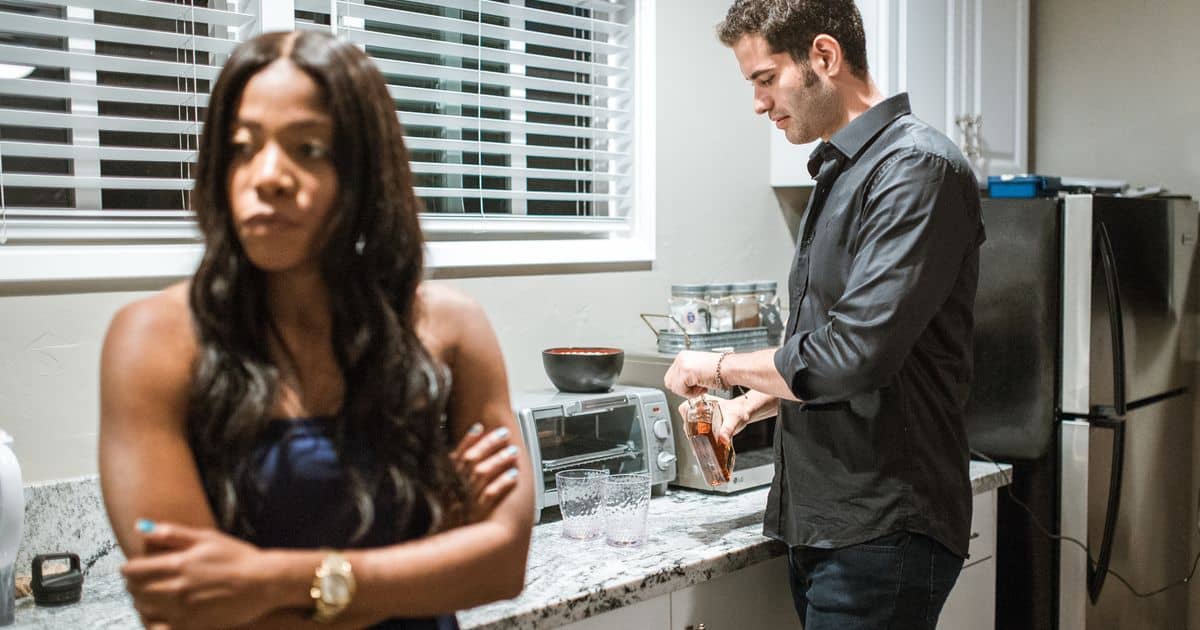
You are sitting on the couch at ten o’clock on a Thursday night, and your partner is three feet away, and the distance feels like a canyon. You opened your mouth an hour ago to tell them something small. A win at work. A worry about your mother. A thought you had in the shower. And somewhere between your first sentence and your third, their face closed. Or they sighed. Or they pointed out, quite reasonably, a thing you had done wrong the day before. And now you are sitting here with a sick feeling in your chest and a hot feeling behind your eyes, typing “can’t win partner” into a search bar because you cannot say it out loud to anyone in your actual life.
Recognize yourself in this?
Talk to Figlet about the feeling that you can’t win with your partner right now. AI relationship coaching grounded in Figs O’Sullivan’s work, LMFT. Free to start, no credit card.
You have tried being softer. You have tried being clearer. You have tried the “I feel” statements from the last article. You have tried not saying anything at all, and that turned into its own accusation. You are starting to believe there is no move you can make in this relationship that does not end with you feeling like the villain, the nag, the too-much one, or the fool who thought this time would be different.
I want to slow you down before you scroll another checklist. I have been a couples therapist for seventeen years. I have sat with thousands of people who could not find the sentence that would land. And I want to tell you what almost no one online will: the reason you cannot win is not that you are picking the wrong words. It is that you are both playing a game the game itself is rigged to escalate. And once you can see the shape of it, you stop losing, because you stop playing.
The Courtroom You Did Not Know You Walked Into

Which pattern is running your relationship?
Take the free three minute quiz and meet the creature behind the cycle you keep getting stuck in.
Here is what I hear people describe in my office, over and over. It sounds different in each mouth but the shape is the same. Every conversation feels like a case being made against them. If they raise a concern, they are told they are attacking. If they stay quiet, they are told they are cold. If they apologize, the apology is dissected and found wanting. If they defend themselves, the defense becomes the new offense. If they get emotional, they are too much. If they stay calm, they are called uncaring. There is no register that works. There is no time of day, no tone, no phrasing, no length of pause, that produces a landing where both of you can breathe.
That is what “can’t win partner” actually means. It is not that you lost one argument. It is that the whole board has become a courtroom, and both of you are the defendant, and both of you are the prosecutor, and the judge never shows up. You are exhausted because you have been on the stand for months.
Grounded in attachment theory, adult love partners regulate each other the way a caregiver regulates an infant. When the bond wobbles, both amygdalas hit the alarm before either thinking brain gets to speak. In that state, every sentence gets read as evidence. Every silence gets read as verdict. You cannot win because winning was never the game your bodies were playing. Your bodies were playing survival.
From Empathi’s research: in 58,221 completed relationship assessments, 74.1% of the 6,159 couples where both partners completed were in the pursue-withdraw cycle. Both partners typically describe the other as the one withdrawing.
The Two Questions Underneath Every Loss
I tell every couple I work with that the bonded body only ever runs two questions, and never in words. Underneath the fight about the phone, the dishes, the sigh at the door, the money, the mother-in-law, your two nervous systems are running the same ancient pair.
Are you there for me. Am I enough for you.
You probably feel one of those louder in your body than the other. Your partner probably feels the opposite one louder in theirs. And this is what almost nobody names for you: the reason you cannot win is that you and your partner are answering the same threat with opposite moves. The louder your protest for closeness, the more their body reads it as proof they have failed you. The deeper their retreat into logic and quiet, the more your body reads it as proof they have stopped caring. You are both firefighters, and you are both spraying gasoline, and neither of you knows it because you both feel like the one being burned.
The person who tends to feel “am I enough for you” more loudly hears every complaint as a verdict on their whole self. Their internal translation of your feedback is roughly: I have failed you before, I am failing you now, I will keep failing you into the future. That is not a paraphrase I invented. That is what withdrawing partners describe, in my office, once the armor finally opens enough for them to speak from inside it. If you have been running the standard scripts and getting more distance for your trouble, you are not doing it wrong. The script is wrong. The whole premise, that a clearer ask will unlock a warmer response, treats a bonded body like a lock with the right combination. It does not work like that.
The Waltz That Guarantees a Loss
The pattern has a name. I call it the Waltz of Pain. One partner reaches, the other retreats, and both partners are in pain the entire time. You are almost certainly the one reaching. Your partner is almost certainly the one retreating. Neither of you chose these roles. Your nervous systems assigned them the first time your bond wobbled, and they have been running ever since.
When you feel the connection slipping, you protest. You want more contact, more talking, more assurance. You want to close the gap because the gap feels like the first inch of losing them. That protest is love with the fire alarm going off. It is not needy. It is not weak. It is your attachment system doing exactly the job it was designed for.
When your partner feels the connection slipping, they collapse inward. Not because closeness is unwanted. Because they cannot stand the idea that they are the reason you are in pain. To a shame-sensitive body, your pain sounds like an indictment that they are bad, inadequate, and failing. Rather than sit inside the burning feeling of not being enough, they retreat into a basement of logic. They defend their schedule in precise paragraphs. They correct a factual detail. They go quiet and stare at their phone. To you it looks like locking you out. To them it feels like the only way to stay in the room without dying inside.
Now here is the mechanism you cannot un-see once you see it. Your protest, which is a bid for closeness, arrives in their body as a verdict of failure. Their retreat, which is an attempt to hold onto a sliver of dignity, arrives in your body as proof you do not matter. Each of you, trying to save the bond, produces exactly the signal that most terrifies the other. You cannot win because the moves you are making to try to win are the moves that keep you losing. And so are theirs.
Why the “Communication Skills” Advice Keeps Failing You
Most of what you have read on this problem tells you to communicate better. Use I-statements. Take a timeout. Schedule a state-of-the-union. Active listening. Reflective paraphrasing. Some of that is fine in calm weather. Almost none of it works when the fire alarm is going off in both of your bodies at once.
You cannot apply a cognitive solution to a biological problem. When your attachment system reads threat, your prefrontal cortex goes partially offline. Logic exits. Empathy narrows. The capacity to hold two realities at once collapses. In that state, the “I feel” statement you just carefully constructed does not arrive as vulnerability. It arrives as a subpoena. And your partner’s calm, reasonable-sounding rebuttal does not arrive as an attempt at clarity. It arrives as dismissal.
This is why couples who have read every communication book on the shelf still end up in the same fight at eleven at night. The tools were correct. The timing was catastrophically wrong. You cannot teach a drowning body to swim. You have to get it back onto solid ground first. There is more on this in my piece on how to get your partner to open up emotionally, which walks through what changes when you stop treating the shutdown as a communication problem.
The Story of Other Is Not the Fight
Here is the second thing I have to name, and it is harder to hear. When you cannot win with your partner, part of what has happened is that you have built a very detailed case against them inside your head. You know all the exhibits. You know the pattern of their sighs. You have a mental file called “things they have done that prove they do not really love me.” I am not accusing you of anything. Every pursuer I have ever worked with has this file. It gets built automatically because the body needs a story that explains the pain.
I call this the Story of Other. It is what happens when your flashlight is pointed outward, at them, cataloging the evidence. And it is one of the reasons you cannot win. Because while you are prosecuting the case in your head, they can feel it. Bodies read bodies. Your partner walks into a room where you are already halfway through your closing argument, and their nervous system registers the verdict before you have said hello. Their shutdown, which you then read as coldness, is often a response to a case they can feel being built against them that they cannot quite name.
The move is not to stop noticing what hurts. The move is to turn the flashlight around. Away from what they did and back onto the somatic tightness inside your own chest. What is happening in your body right now. What is the old shape of this ache. What does your throat feel like. When was the first time you felt this exact loneliness in a room with someone you loved. That is the Experience of Self. And it is the only ground from which anything can shift.
What Actually Changes the Game
You do not win the courtroom. You leave the courtroom. That is the whole shift.
Leaving the courtroom looks specific. It is not “be nicer.” It is not “let it go.” It is a set of moves that most couples never learn because nobody taught them.
The first move is naming the pattern out loud, together, when you are not in the middle of it. You sit down on a Saturday morning with coffee, when neither of you is activated, and you say something like: I notice we keep ending in a place where I feel like I cannot say anything right and you feel like you cannot do anything right. Neither of us is trying to make the other feel that way. I do not want to keep doing this. Can we call it the pattern instead of blaming each other for it. This is what secure-functioning couples do. They externalize the dance so they can stand next to each other and look at it together, instead of standing across from each other and pointing at it. I write more about this in what secure functioning in relationships actually is.
The second move is learning to notice the moment your own body leaves the window. Your chest goes cold. Your throat closes. Your stomach drops. That is the moment your prefrontal cortex is going offline. Any sentence you construct after that moment is a sentence built by your survival brain, and it will land as a weapon whether you meant it to or not. The most useful thing you can say in that moment is not the perfectly worded complaint. It is: I am flooded. I want to talk about this. I cannot talk about it right now. Can we come back in twenty minutes. And then you actually come back.
The third move is the one that changes everything, and it is the hardest. When your partner retreats, instead of chasing the retreat with more content, you name the tenderness underneath your own protest. Not the case. The ache. Something like: when you went quiet just now, the little kid in me heard I do not matter. I know that is not what you meant. I am telling you what happened in my body. That sentence does not land as a subpoena. It lands as a hand extended. It bypasses their shame system because it does not accuse them of anything. It just tells the truth about you. If you want to understand more about why the retreat happens the way it does, my piece on why does my partner ignore me goes deeper into what is actually happening in the withdrawing body.
Ready to work on this?
Figlet is AI relationship coaching grounded in attachment science and Figs O’Sullivan’s clinical work, LMFT. First messages free, no signup.
The Kitchen Story That Is Really Every Story
A woman sat on my couch a while back and told me she knew her marriage was over. I asked her what happened. She said: he makes himself one cup of coffee every morning and never makes me one.
You might read that and think, that is it. That is your crisis. But listen to what actually happened in the sixty seconds before breakfast. Her husband walks to the kitchen. Makes one cup. Sits down with his phone. And in her chest, a tightness forms. The thought cascade: he did not think about me. He does not notice me. I am alone in this marriage. The entire case file compressed into a minute before he has said a word.
Meanwhile her husband is standing at the counter thinking about a work deadline. He is not choosing to leave her out of the coffee. It has not occurred to him. When she brings it up later, he hears: you have failed me again. And he retreats. And she reads the retreat as: I was right, he does not care. And now they cannot win.
The coffee is not the fight. The coffee is a proxy for “am I on your mind, do I matter, are you there for me.” His retreat is not indifference. It is the collapse of a body that just got told, in his ears, that he is failing again. Two people who love each other, missing each other by inches, in a kitchen, at seven in the morning, every day for years.
The Shift You Can Actually Make Tonight
You do not need to fix the whole pattern this week. You need one small thing to be different tonight, so your body has evidence that a different move exists. Here is what I would tell you if you were sitting on my couch.
Pick one moment today where you can feel yourself building the case. Notice it. Do not judge it. Just notice: I am doing the thing. Then turn the flashlight around. Ask your body: what is the ache underneath the case. What is the two-year-old feeling. Where does it live in you.
Then, when it feels possible, say one true sentence to your partner that is about you, not about them. Not “you never,” not “you always,” not “why can’t you.” Just: something in me is aching tonight and I do not fully know why. I wanted you to know. That is it. You do not need to explain it. You do not need them to fix it. You are just placing a small, honest signal on the table between you.
Watch what happens in their body. If they have been in the retreat for a long time, it may take more than one sentence. It may take weeks of small honest signals with no case attached to them. But something starts to shift, because you have stopped playing the game that guaranteed you would both lose.
This is not a you problem or a them problem
“Round and round they go. Escalating judgments. Reaffirming worst fears. Two people throwing emotional boomerangs, doing exactly what makes logical sense to survive their own pain, only to gut their partner and ensure their own continued suffering. The way you try to get out of feeling hurt and threatened usually hurts and threatens your partner.”
“The fight is never about the content. It is always about the bond.”
Figs O’Sullivan, LMFT
Common Questions
Why does it feel like my partner twists everything I say?
When a shame-sensitive body hears a complaint, it does not process content. It processes verdict. So your neutral observation lands in their nervous system as “you are failing again,” and they defend against the verdict, not the observation. It feels like twisting from the outside. From the inside, they are drowning and grabbing at any handhold. The fix is not to phrase it more perfectly. It is to lower the threat before you speak at all.
Is it normal to feel like I always have to walk on eggshells?
Walking on eggshells is what a body does when it has learned that any bid it makes might trigger an escalation it cannot control. It is a survival strategy, and it is exhausting, and it is a real signal that your bond has become a place your nervous system does not trust. It does not automatically mean the relationship cannot heal. It means the current pattern is not sustainable and something structural has to change, not just your word choice.
Should I leave if I feel like I can’t win with my partner?
Not on the strength of the feeling alone. The “can’t win” feeling is often the anxious attachment alarm bell, not evidence of a bad partner. Before you make a leaving decision, you need to know whether the pattern can shift when both of you can see it and name it together. If your partner refuses to look at the dance, or if there is contempt, coercion, or violence involved, that is different territory. But most “can’t win” pain is a treatable pattern, not a verdict on the relationship.
Why do I feel guilty even when I know I did nothing wrong?
Because the child inside you learned very early that when someone you love is in pain, you must be the reason. Small children cannot conclude their caregivers are the problem, so they conclude they themselves are. That wiring stays. As an adult, your partner’s discomfort registers in your body as your fault before your thinking brain even weighs in. The guilt is old. It is not evidence about the current situation.
How do I stop being defensive when my partner brings something up?
By noticing the moment your chest tightens and naming it before you speak. Something like: “I want to hear this. I can feel myself getting defensive. Give me a second.” That one sentence buys your prefrontal cortex enough time to come back online. Defensiveness is not a character flaw. It is a nervous system flinching. You cannot will it away. You can just make space around it.
Do not just close the tab on this.
Bring what surfaced here into a real conversation. Figlet coaches you through it, grounded in Figs O’Sullivan’s work, LMFT. Free to start.
You did not lose the argument last night. You were never in an argument. You were in a dance neither of you chose, with rules neither of you wrote, and every move that felt like a fight for the bond was read by the other body as an attack on it. Stop looking for the sentence that will finally land. Start looking for the pattern that keeps making landing impossible. That is where the work is. That is the only ground from which anything real between you can grow back.
Keep Reading



Every couple has a pattern they cannot see. Find yours.
In love, each of you is a Relentless or a Reluctant, which makes you one of three kinds of couple: Relentless and Reluctant, two Relentless, or two Reluctant. The free quiz reveals your creatures and the cycle they fall into together. About three minutes.
No signup needed to start.
The Relentless

The Reluctant