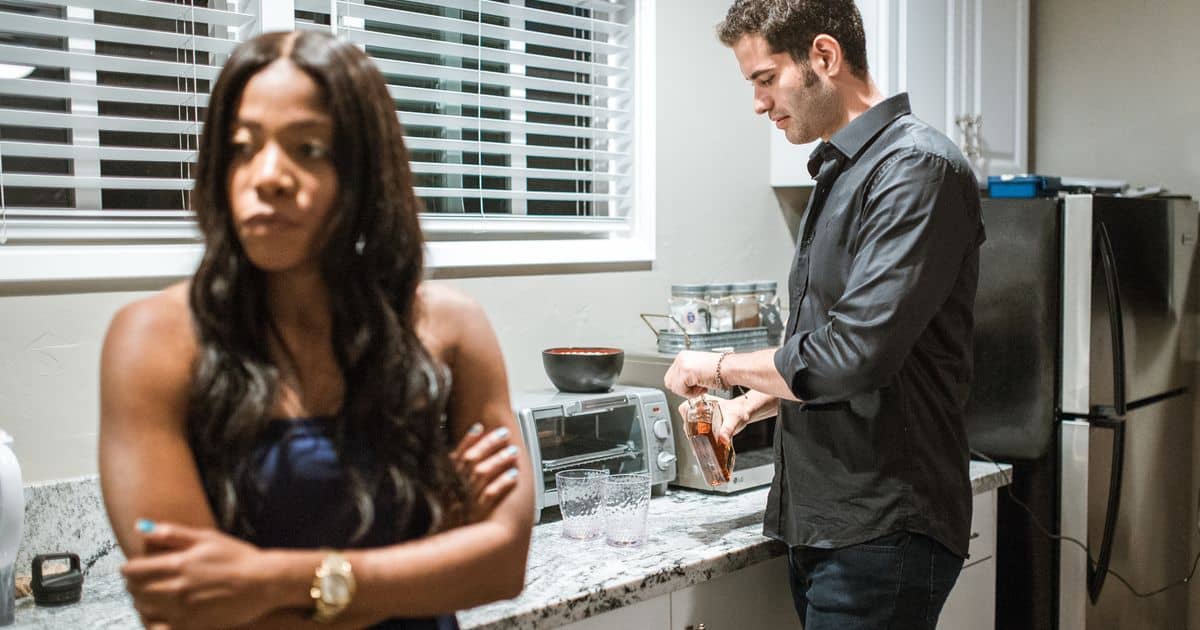
If your partner wants an open relationship and you don’t, you are allowed to say no. A request to open things up is rarely just about other people. It is usually a message about something already happening between you (the bedroom, the bond, a hunger for novelty, an affair that has already started, or a real difference in values), and the work is finding out which one it is before anyone decides anything.
Maybe it came out over dinner, light, almost a joke. Maybe it came at the end of a fight. Now it is late, they are asleep or pretending to be, and you are lying there with your chest tight, typing the words into your phone because you cannot say them out loud to anyone yet. If you need help finding the first sentence for tomorrow, Figlet can help you find the words tonight.
My partner wants an open relationship but I don’t. Do I have to agree?
Stuck in the same fight again?
Talk it through with Figlet right now. Private, judgment free, built on 17 years of couples therapy.
No. Nobody owes anybody sex, and nobody owes anybody a relationship structure they did not choose. I have been a couples therapist for seventeen years. You do not have to deliver a yes or no by the weekend.
Monogamy is not the only way to live. Some couples negotiate agreements that genuinely work for both of them. But for many of us, monogamy is the best available path to the comfort, the belonging and the secure base we deeply want. If that is you, your no is not prudishness. It is information about what your nervous system needs to feel safe in love.
Why would my partner want an open relationship?
The bedroom has gone quiet. In almost every couple I see, a libido mismatch is a connection problem showing up in the bedroom. One partner reaches because sex is where they feel chosen. The other pulls back because every reach feels like a test they are about to fail. If that is your house, the open relationship ask may be a pursuer’s despair: someone who stopped believing they will ever be wanted at home. I go deeper on that loop in how to deal with mismatched libidos.
Someone wants an exit without saying exit. For a partner who has been withdrawing for years, an open arrangement can be a way to leave the room without leaving the house. Couples reach for open relationships or affairs as the pressure valve.
There is already someone. Sometimes “can we open it up” is a request for retroactive permission. If there is a specific person, that is a different conversation, and I would start with whether a relationship can survive when trust is broken.
It is a real values difference. Genuine incompatibility exists. It is rarer and more specific than people think, and monogamy versus non-monogamy is on the short list, next to whether to have children. If your partner has always known this about themselves, and it is not a reaction to anything between you, that deserves to be taken seriously, not argued away.
How do I tell if it’s about us or about who they are?
A few things I listen for. Did the wish appear after a long dry stretch in the bedroom, or after a rupture that never got repaired? That points to the bond. Can your partner tell you what they hope it would give them, beyond “more”? If the honest answer is “to feel wanted” or “to feel alive again,” those are attachment longings, and they are longings you might be able to meet. If the answer is that they have felt this way across every relationship they have had, long before you, that points to orientation or values.
Most of the time, what looks like incompatibility is a misdiagnosis: two people activated and stuck in a pattern. Before either of you decides you simply want different things, make sure you are not building an exit from a conversation you have never actually had.
Why does it feel like I am not enough?
Because that is exactly the question your body heard. There are really only two questions your nervous system is ever asking your partner: Are you there for me? Am I enough for you? When the person you are most bonded to says they want someone else too, your body does not file that as a lifestyle preference. It hears an answer. You are not enough.
That answer lands as shame, and shame is a body event before it is a thought. The nervous system does not sit still with shame. It moves, along what I call the Compass of Shame. It withdraws (I will never let them see me hurt again). It avoids (one more glass, one more episode). It attacks the self (of course they want someone else, look at me). Or it attacks the other (you are selfish, you are disgusting). All four make sense. None of them get you the conversation you actually need.
I know this one from the inside. Years ago, I was in a polyamorous relationship. When my primary partner shared her unrelenting desire to connect emotionally and sexually with an ex-lover, it broke me to pieces. I felt heartbroken, rejected and powerless. Within our agreements it was her right to follow her longing, and my job to process the pain, which I did while sobbing in the arms of my friends. Being deeply vulnerable to more than one person dramatically ups the ante for the scary feelings we all have when we are wounded in love. If the request alone is bringing you to your knees, that is not weakness. That is your attachment system telling you the truth about what it can hold.
The open relationship that wasn’t
A married couple came into my office asking for help transitioning into an open marriage. They wanted to do it thoughtfully. They had read the books. They had a plan. When I saw them individually, one thing came out that they had not led with. They had not been sexually intimate with each other in seven years.
The rupture did not start with some enlightened polyamorous impulse. Years earlier, one of them had reached and the other had said no. Nothing dramatic. Just a normal, tired, married no. Both of them were too afraid, too proud, too tender to talk about what that no landed on. So the no became a pattern. The pattern became a policy. The policy became seven years. The open relationship was not a philosophy. It was an escape route from a pattern neither of them could face, and what they actually needed was to grieve what happened seven years ago and start over.
That is the Waltz of Pain in the bedroom. The Relentless Lover reaches, the Reluctant Lover retreats, each move confirming the other’s worst fear, until one of them proposes a structure that means they never have to stand in that room together again. If your bed has gone quiet, work on that before you read anything about opening up.
If you want to see which side of that dance you are on and what to say from there, Figlet will walk through it with you.
Should I agree to an open relationship to save my marriage?
Please don’t. Consent given out of fear of losing someone is not consent. It is a hostage negotiation with your own heart. Every yes given out of guilt or pressure goes into the body’s ledger, a running record of every time you swallowed something to keep the peace, and that ledger always comes due, usually as resentment three months later. Opening a relationship that is already starving does not feed it. It just adds more people to the hunger.
If you are being pressured, threatened, or pushed into sex or a sexual arrangement you have said no to, that is not a dance and it is not a values conversation. Please get support today: the National Domestic Violence Hotline is 1-800-799-7233, and if you are in crisis, call or text 988.
My boyfriend wants an open relationship. Is that different?
Earlier in a relationship, the request is often closer to a values statement than a distress signal, because there is less history for it to be about. Ask him whether this is something he has always wanted. If it is, and you know you want a monogamous bond, that is one of the few genuine incompatibilities, and kinder to name early. If it surfaced after things got harder between you, treat it like any other bid and get curious about what he is reaching for.
My wife wants an open marriage, or my husband does. What now?
In a marriage the stakes feel enormous, which is exactly why speed is your enemy. Ask what has been missing for them, and how long it has been missing. Look honestly at the bedroom, and at the Third Parties (the phone, the work, the wine) that have been quietly taking each of you away from the other. Long-term desire is usually responsive: it comes back when both bodies feel safe again. You will not find out whether that is possible if you are already arguing about rules for other people.
What do I say tonight?
One line, and then stop talking:
“I am not saying yes, and I am not leaving the conversation. Tell me what you are hoping it would give you.”
Then listen. You are not agreeing and you are not prosecuting. You are looking for the longing underneath the request.
If you are the one who asked
Your wish is not a crime, and you are allowed to have longings that do not fit inside the boundaries of your relationship. But the impact of your request is bigger than your intention. Your partner’s body heard “you are not enough,” whatever you meant. Before you defend the idea, ask yourself what you are actually hungry for. If it is to feel wanted, chosen, alive, try saying that first: “I miss you, and I am scared we are losing each other.” If, after that, it is still who you are, say that plainly too.
Where to go from here
If the request grew out of a quiet bed, start with how to fix a dead bedroom marriage. If you are trying to work out whether this is a real values difference, read why incompatibility is almost never the real problem. If there is already someone else, the work is repair before it is anything else.
Frequently asked questions
Is it normal to feel devastated when your partner wants an open relationship?
Yes. Your attachment system is built to vigilantly check whether the person you are most bonded to is there for you. A request to share that bond lands as a threat, and the hurt is your body doing its job, not proof you are insecure.
Does wanting an open relationship mean they don’t love me?
Not necessarily. Often it means they are lonely inside the relationship, or they have stopped feeling chosen in the bedroom. Sometimes it is a genuine values difference. Ask what they hope it would give them before you decide what it means.
Can a relationship go back to monogamy after this conversation?
Yes, if the conversation turns toward what has been missing between you. What I watch for is willingness on both sides.
What if we really are incompatible?
Then you have found one of the few genuine incompatibilities, like a split over having children, and it deserves grief rather than blame. Either way, you deserve to decide from clarity, not fear.
If you want help with the next conversation, Figlet is a coaching tool I built. Tell it what happened, it shows you the pattern the two of you are caught in and gives you one line to say. It is free to start tonight.
Keep Reading

Stuck in the same fight again?
Figlet is relationship coaching built on 17 years of couples therapy. Talk through what is happening the moment it matters, get a clear next step, and stop circling the same fight. Private, judgment free, ready whenever you are.
Free to start. No credit card needed.
Figs O'Sullivan
Founder · EFT couples therapist
“What I would tell you at 10pm, if I could.”