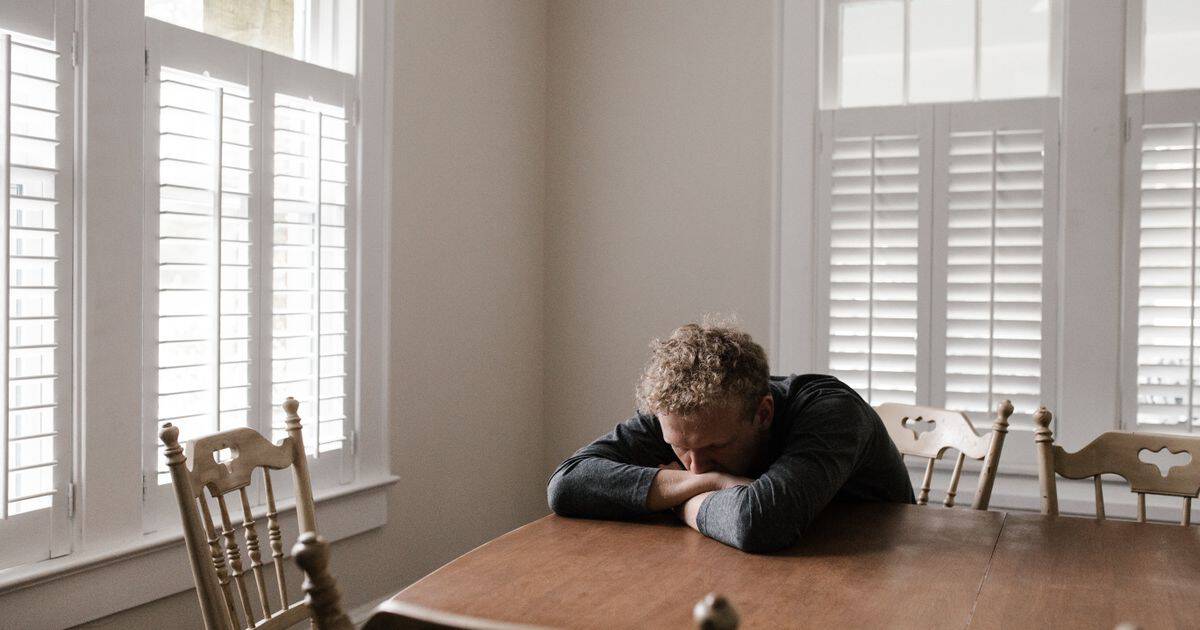
The fight ended an hour ago. Or it didn’t end, it just went quiet. And now you are lying there replaying it, and for the first time you are not replaying what they said. You are replaying what you said. The tone you used. The look you gave. The thing you brought up again even though you swore you would let it go. And somewhere in the middle of the tape a question shows up that you would never say out loud: am I the problem in my relationship?
That question is more honest than most of what gets said in my office in the first twenty minutes. So here is an honest answer. Not with a quiz, and not with the kind of reassurance that makes you feel better for an hour.
The answer most people do not want
When talking turns into the same fight
Talk it through with Figlet right now. Private, judgment free, built on 17 years of couples therapy.
Yes. You are part of the problem. And so is your partner. As we say in Ireland, “there’s two of ye in it.”
In the heat of a fight we can all come across like an ass. Even you. Even when you’re right. Maybe you blame and criticize because you feel neglected. Or you shut down and withdraw because you worry your efforts are never enough. Whatever strategy you use to get out of the conflict, chances are it makes you look like the bad guy from where your partner is standing.
But that is not the same as being the problem. You are not a toxic person. What you are is a nervous system doing exactly what it learned to do to survive, inside a relationship that matters more to you than almost anything. Those strategies made sense once. Right now they are creating a toxic environment for the person you love, and their strategies are doing the same to you.
A couple in my office once spent the first twenty minutes of our session assigning blame. The wife sat on the edge of the couch reading from a notebook where she had documented every bad behavior her husband had shown that month. He sat rigid on the far armrest firing back with his own list, quoting internet articles to prove he was the emotionally healthy one. I let them diagnose each other for a few minutes and then I stopped it. I have watched that scene hundreds of times in seventeen years. Two people, both certain, both holding what they think is the fire extinguisher, both pouring gasoline.
The person who is never asking this question
If you’re thinking, “I’m never an ass when I fight,” that may be your biggest problem of all. The partner who claims to be above reproach, who believes everything would be fine if the other person just got their act together, is the one I worry about most.
The fact that you are asking “is it me” at all tells me something good about you. It means some part of you can step off the stage and sit in the audience for a minute. That part is the part that changes relationships.
There is a catch, though. Asking the question is not the same as doing the work. A lot of people ask “am I the problem” as a way of attacking themselves, which is just another exit from the pain. In shame research it has a name. The Compass of Shame has four directions a person runs when vulnerability gets too big: attack self, attack other, withdraw, avoid. Lying awake concluding that you are terrible, that you ruin everything, that your partner deserves better, is attack self. It feels like accountability. It is not. It is shame wearing accountability’s clothes, and tomorrow it will flip into defending yourself or going quiet, because nobody can live in that feeling for long.
What is actually happening between you
Underneath every argument about the dishes, the calendar, the money, the in-laws, your nervous system is running two ancient questions about your partner. Are you there for me? Am I enough for you?
One of you probably feels the first question louder. The other feels the second. And this is the part almost nobody names: you are both answering the same threat with opposite moves.
If you are the anxious partner, you might believe your relentless questioning and your intense demands for connection are simply healthy communication. But to the partner across the room, your pursuit lands like a wave that confirms they are a disappointment. Crushed by that, their body goes offline and they withdraw into silence to survive the flood.
If you are the more avoidant partner, you might think your calm logic and quiet retreat are the mature way to de-escalate. But to the anxious partner, your silence registers as abandonment, and they come at you harder just to get a pulse.
I call this the Waltz of Pain. One, two, three. A negative perception of your partner, a reactive feeling, an action that flows straight out of both. Your three steps land on them. They take theirs. It lands on you. Neither of you designed it, and both of you keep it going while being completely convinced the other one started it.
And here is the thing about the question you are asking. Impact is bigger than intention. You can intend your criticism as a plea for closeness and it can still land as a verdict. You can intend your silence as a way to calm things down and it can still land as abandonment. So yes, you are contributing. Not because you are bad. Because you are hurting and your hurt has a costume, and the costume hurts them.
My own answer to the question
Here is mine, since I am asking you to look at yours.
The most common way I am the problem in my marriage looks like this. Sometimes when I feel alone and burdened, I react by being a blaming, criticizing, disapproving ass to my wife. Sometimes it is so subtle I don’t even realize I’m doing it. When she responds with understandable hurt and her own reactivity, I feel even more justified, and I turn up the volume.
What makes me remotely tolerable to live with is this. I can see, usually in retrospect, what I am really reacting to. And it is not a failure on her part to meet my needs. I am reacting to the pain of feeling alone in the world. That deep-down sense of aloneness lives inside me, and it was there long before I met my wife. It is in exactly those moments that I need her the most, and it is in exactly those moments that I am most likely to push her away.
I am not unusual. In 58,221 completed relationship assessments, 33% named “alone” as their deepest feeling when love isn’t working. More than rejected. More than abandoned. A lot of “being the problem” is really a lot of people feeling alone and handling it badly.
How to find your part without drowning in it
The useful version of “am I the problem” is not a verdict. It is an investigation. Here is how I walk people through it.
Trace the judgment back to the need. I can often trace a judgment of my partner right to an unmet need in me. If I judge her as a bad listener, I probably long to feel heard. If I feel disrespected, I probably long to be seen or valued. If I judge her as cold, I probably long to feel cared for. Your list of their flaws is a map of your own longing, written upside down.
Stop telling the Story of Other. The Story of Other is pointing the flashlight outward and building a case. Gathering evidence. Connecting the dots. The story feels true because it is partly true; your partner probably has hurt you. But the case you have built leaves you out of it. The Experience of Self sounds different: something painful inside me just burst to the surface, and your behavior was the spark, not the whole fire.
See the cycle as the enemy. Not my cycle and your cycle. Our cycle. The way out is for both of you to accept a simple truth: we are both hurting, we are both reacting, and it is only happening because we are so important to each other.
Own it out loud. Not the whole relationship. Your piece. The move you make when you get scared.
If you want more on the moment-to-moment part, I wrote about how to stop being defensive with your partner, which is usually where the ownership falls apart. And my original piece on toxic behavior in a relationship, and the times you’re the problem goes further into the strategies we all use.
When the answer really is no
There is a group of people who type this question for a different reason, and you deserve a straight answer if you are one of them.
Some people ask “am I the problem” because they have been told they are, over and over, until they cannot trust their own read on anything. If your partner is rewriting events, denying things you both know happened, isolating you from friends and family, controlling money, or using threats, that is not a cycle with two dancers. If there is violence, threats of violence, someone blocking your exit, or a voice used in a way that frightens you, stop reading this and talk to someone who does this for a living today. In the US, the National Domestic Violence Hotline is 1-800-799-7233. You are not the problem for being afraid.
If what you are feeling is closer to being slowly sanded down by constant correction, I wrote about that separately in when your partner makes you feel inadequate. And if you keep wondering whether you are losing your mind, read what to do when your partner makes you feel crazy.
What to say tonight
Not in the middle of the fight. Trying to make anyone take responsibility in the middle of an emotional conflict is almost never a helpful first step, and that includes you. Wait until it’s quiet. Then say one thing, about your step only:
“I’ve been thinking about the fight. When I get scared that I don’t matter to you, I get critical (or I go quiet), and I know that makes it worse for you. I’m sorry for my part. I don’t want to be on opposite sides of this.”
That’s it. No “but.” No list of their part. You are not confessing to being the problem. You are showing their nervous system there is a way to be in this that doesn’t require armor.
If your partner is the one reading this
If someone you love sent you this, it probably took courage. They are not asking you to agree that you are the problem. They are asking whether you can look at the dance with them instead of at each other. When they own their step, try owning one of yours. That is how the Waltz of Pain slows down: one honest sentence at a time, from both ends of the room.
Where to go from here
Everyone is doing the best they can to make love work. You make sense, and your partner makes sense, even when you are both behaving badly. The question was never really “is it me.” It is “what am I doing when I get scared, and what am I so scared of?”
If you want help finding your step, tell Figlet what the last fight was about, what you said, and what you were feeling right before you said it. It will show you the cycle you two are in and the one sentence that reaches under it. It is built on the same work I do in my office, and you can start for free tonight.
Keep Reading


When talking turns into the same fight
Figlet is relationship coaching built on 17 years of couples therapy. Talk through what is happening the moment it matters, get a clear next step, and stop circling the same fight. Private, judgment free, ready whenever you are.
Free to start. No credit card needed.
Figs O'Sullivan
Founder · EFT couples therapist
“What I would tell you at 10pm, if I could.”