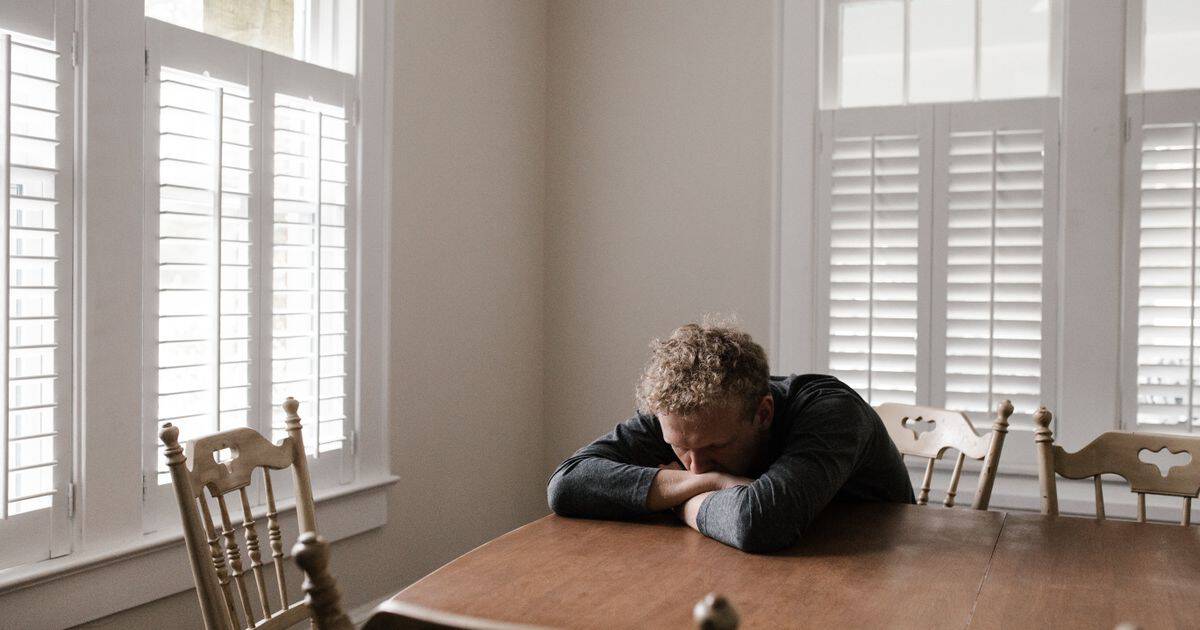
The questions a couples therapist asks fall into two groups. In the first session you get the intake questions: what brings you in, how long you have been together, what a typical fight looks like, what you have already tried, and (asked of each of you privately) whether anyone is afraid at home.
After that, a good therapist stops asking about the content of the fight and starts asking about what happens underneath it: what story you tell about your partner, what just happened inside you, and what your body is asking your partner for.
If you are dreading the next fight and want to practice saying the real thing first, Figlet, my AI relationship coach, can walk you through it, there at 2 in the morning, or right now.
You finally made the appointment. You are sitting on a couch next to the person you love and cannot reach, the air between you thick with exhaustion and quiet dread. You have a version of this in your head. You are hoping the therapist will turn to your partner and ask the question you have been building a case around for months. Why don’t you prioritize me. Why do you shut down. Why can’t you just say the thing.
Or maybe you are dreading it. You are hoping the therapist will not ask why you get so critical, so loud, so much. You have already convicted yourself. You just do not want anyone else to say it out loud.
Most couples walk into my office expecting a referee. A judge who will listen to the evidence and rule. That is not what a good couples therapist does. In seventeen years of doing this work, I have learned that the questions that actually change a relationship are almost never the ones the couple came in wanting me to ask.
The content of your fight is a red herring. If you are fighting about the dishwasher, the problem is not the dishwasher. If you are fighting about the parking ticket, it is not the parking ticket. The questions I ask are designed to bypass all of that and get underneath, to the biological alarm system that is actually running the show.
Here is what those questions actually are, and what they are trying to do.
The Frame: Why Behavior Questions Miss

Which pattern is running your relationship?
Take the free three minute quiz and meet the creature behind the cycle you keep getting stuck in.
Before I give you the questions, I need you to understand what the questions are doing. Otherwise they will land as tips, and tips do not heal marriages.
Adult romantic partners function as each other’s primary regulators. That is attachment theory stated in one sentence. Your nervous system treats your partner the way a child’s brain treats a parent. When the bond feels shaky, your amygdala fires before your thinking brain gets a vote. Cortisol floods. Logic goes offline. The house catches fire.
Underneath every argument, two questions are running on a loop in your body. Are you there for me. Am I enough for you. Every fight about logistics is a proxy fight for one of those two questions. Every eye roll, every sigh, every three-hour silence is your body trying to survive what feels like a “no” to one of them.
The questions a good couples therapist asks are all designed to get you underneath the content and into that biological reality. Not because your problems are not real. But because you cannot solve at the level of behavior what was generated at the level of the survival response.
Recognize the loop you’re stuck in?
Talk to Figlet about what actually happens between you and your partner. AI relationship coaching grounded in Figs O’Sullivan’s work, LMFT. Free to start, no credit card.
What the data shows: in 58,221 completed relationship assessments, the number one unmet need was “like we’re a team”. 24,037 people named it, ahead of understood, loved, heard and appreciated.
The First Session: The Intake Questions Every Couples Therapist Asks
Before I get anywhere near the deeper questions, there is a first session, and it has its own set of questions. Your first couples therapy session is not about solving anything. Most couples walk in expecting the therapist to fix the problem in 50 minutes. That is not what happens. The first session is an assessment. I am listening, watching, and trying to understand three things: what brought you here, how you are with each other, and what is happening underneath the surface.
The opening questions
It usually starts with something simple. Some version of “What brings you in today?” and then, for each of you:
- How long has this been going on?
- What does a typical conflict look like between you?
- What have you already tried?
- What do you want from therapy, and why now?
- How long have you been together, and what drew you to each other in the first place?
You do not need to prepare a speech. You do not need to agree on what the problem is. Most couples do not, and that disagreement tells me something important. What I am really tracking while you answer is not the words. Who speaks first? Who looks at whom? Is there eye contact between you, or are you both talking to me as if your partner is not in the room? Those patterns matter more than anything you say. I go through the whole hour step by step in what to expect in your first couples therapy session.
The history questions
Somewhere in the first session or two I will ask about the families you grew up in. Who comforted you when you were scared? What happened in your house when someone was sad or angry? Not because I want to analyze your parents, but because the strategy you use in a fight today (reaching harder, or going quiet) was usually learned long before you met your partner. These questions plant the seeds for the time machine question later on.
The safety questions I ask each of you alone
There is one set of questions I always ask, and I ask them of each partner privately. Is there physical violence in this relationship? Has anyone blocked an exit, grabbed a wrist, broken things? Are you ever afraid of what happens when you get home? If the answer is yes, saving the relationship is not the priority. Your safety is. Couples therapy asks both people to be vulnerable, and when one partner’s vulnerability puts them at risk of harm, we cannot proceed in the joint room. Safety comes first, with individual support and specialized help.
The secrets question
A good couples therapist will also tell you, in the first session, how they handle secrets. In my practice the relationship is the client. If one of you emails me or pulls me aside after an intake to share something your partner will not hear, I will not become a co-conspirator. Sometimes it is an affair, sometimes a hidden debt, sometimes a decision that the marriage is already over. I will not out you, but I will help you bring it into the room. Some clinicians use a limited confidentiality model instead. What matters is that your therapist tells you their model, in writing, before you say anything you would not want your partner to hear. I explain the whole policy in the confidentiality rules in couples therapy.
Then, once the frame is set, the real questions begin.
Question One: “What is your negative story about your partner right now?”
This sounds counterintuitive. Why would I start by inviting the criticism.
Because I have to begin where you actually are. When you are in distress, you are locked into what I call the Story of Other. You are entirely focused on how your partner is failing you. They are cold. They are demanding. They are too much. They are not enough. You have a whole case built up, and until I let you put it on the table, you cannot go anywhere else.
So I ask. What is your negative perception of your partner. What is the story you tell yourself about who they are being right now.
That story is step one of the Waltz of Pain, the negative loop every distressed couple is caught in. The dance has three steps for each partner. A negative perception of the other. A reactive secondary emotion, usually anger, frustration, or numbness. And a protective action, which is the criticism, the shutdown, the walking away.
When you take your 1-2-3, it triggers your partner’s 1-2-3. Their story about you flares. Their reactive emotion fires. Their protective action deploys. And that triggers you all over again. One, two, three. One, two, three. Neither of you is trying to hurt each other. You are both just trying to survive the feeling of the disconnection.
I ask about the story of other so I can help you see it as one step in a larger dance, not as the truth about your partner. Once you can see the whole loop, you can step off the stage and take a seat in the audience.
Question Two: “What just happened inside you right then?”
This is the question that opens the door.
When one of you rolls your eyes, sighs, folds your arms, or goes flat behind the face, I stop. I do not ask why you did that. I do not ask what you meant by it. I ask what just happened inside you in the split second right before.
This is the doorway out of the Story of Other and into the Experience of Self. Because underneath your anger, underneath your silence, something much more vulnerable is happening. You are having a primary emotion. Sad. Lonely. Ashamed. Scared. Powerless. That emotion is unbearable, so your system deploys a protective strategy on top of it. The eye roll is not the feeling. The eye roll is what you do because the feeling is too much.
I had a couple in my office where the wife was describing how alone she felt, and mid-sentence her husband rolled his eyes. A rookie therapist asks the husband why he was being dismissive. That question deepens the loop. Instead I asked him, “What was the split-second feeling right before that eye roll?” He was quiet for a long time. Then he said, “I heard her say I am failing her again, and I felt like I am never going to be forgiven. It is easier to look annoyed than to feel that.”
That is the whole game. The eye roll was a fear of shame so old it had its own gravitational field. Once she could see that, she was not sitting next to a dismissive man. She was sitting next to someone drowning in how much he cares and how badly he thinks he is failing her.
Question Three: “What is your body asking your partner right now?”
Not what your mouth is asking. What your body is asking.
Because in the deepest layer of any fight, one of two questions is running. The reacher, the one who protests, criticizes, escalates, pursues, is asking “Are you there for me?” I call this partner the Relentless Lover. Their core wound is abandonment. Their body says, please do not leave me, please see me, please let me matter.
The withdrawer, the one who goes quiet, checks the phone, retreats into the garage or into their head, is asking “Am I enough for you?” I call this one the Reluctant Lover. Their core wound is rejection. Their physiology says, please do not see my flaws, please do not confirm what I already secretly believe about myself.
Both are trying to survive the same threat. The loss of the bond. They just learned opposite strategies for doing it, probably before they were five years old. When I ask each partner what their body is actually asking, we get out of the content and into the biology. Nobody is the villain. Nobody is the crazy one. You are two nervous systems in survival mode, pinging off each other in a loop older than either of you.
Question Four: “When has your body felt this before?”
This is the time-machine question, and it is where the real depth work begins.
Your limbic system cannot tell the difference between a threat that happened when you were six and a threat happening right now at your kitchen table. When your partner pulls away, your brain does not process “my adult partner needs a minute.” It processes “the person I depend on is leaving,” because that is what withdrawal meant when you were small and could not survive on your own.
So I ask. When has your body felt exactly this before. Not intellectually. Not “my dad was distant.” I mean, close your eyes and let your body take you back to the earliest scene that has this exact texture.
What comes up is almost never what the person expected. A father who was there but never asked how they felt. A mother whose anxiety they learned to manage instead of their own. A house where sadness was met with “you are fine.” A specific afternoon at age four, alone in a room, deciding something about themselves that they have been enforcing ever since.
I have written more about how those old wounds hijack current love in this piece on unresolved childhood trauma in relationships. The point of the question in session is not analysis. It is to help you feel, in your body, that the intensity of your current reaction is not proportional to what your partner just did. It is proportional to what happened to that younger part of you a long time ago. Your partner is standing on an old wound. That does not make them innocent. It also does not make them the origin of the pain.
Question Five: “If your partner could not fail, what would you want them to know?”
This is a shift question, and I do not ask it until enough underneath has surfaced that both partners can feel each other’s ache.
Once you can see your partner’s step in the dance, feel their old wound, and recognize their protective strategy for what it is (a brilliant adaptation, not a character flaw), something changes. The story of other softens. The armor drops a quarter of an inch. And I ask, if you did not have to defend yourself right now, if your partner was not going to weaponize what you say, what would you actually want them to know.
The answers, when they come, sound nothing like the fight the couple walked in with. “I need to know I still matter to you.” “I feel like I have been disappointing you since the day we got married.” “I am so tired of being the strong one.” “I am scared you don’t want me anymore.”
That is the real conversation. That is what was underneath the dishwasher, the parking ticket, the tone of the text. That is what your body has been trying to say for years, and could not, because it was too dangerous to say straight.
Ready to have the real conversation?
Figlet is AI relationship coaching grounded in attachment science and Figs O’Sullivan’s clinical work, LMFT. First messages free, no signup.
Question Six: “Can you turn toward your partner and say that directly?”
This is the moment I have been building toward the whole session. In emotionally focused work, we call it a softening or an enactment. I do not want the vulnerable truth reported to me. I want it delivered, eye to eye, to the person it belongs to.
“Can you turn to her and tell her what you just told me. Not the story. The feeling underneath it.”
This is the hardest question in the session. Because saying “I feel abandoned” or “I feel like a failure” to your partner’s face, without armor, without a defense already prepared for how they might respond, is the most vulnerable thing a human being can do. It is also the only thing that actually repairs the bond.
A therapist’s job in this moment is to hold the container so tightly that neither person falls through. If the withdrawing partner starts to intellectualize, I slow them down. If the pursuing partner tries to add a jab at the end, I catch it. The couple is not ready to do this alone yet. That is why they are in my office. But once they have done it three or four times, they start to be able to do it at home.
Questions I Do Not Ask
Just as important as the questions I ask are the ones I refuse to ask.
I do not ask who started it. The Waltz of Pain happens everywhere, all at once. There is no clean starting point. Trying to establish one just entrenches the story of other.
I do not ask you to prove your case. I am not a courtroom. If I let you spend the session marshaling evidence against your partner, I have failed you both. You would leave more entrenched than you came in.
I do not ask, “what do you need your partner to do differently?” That is a behavior question, and behavior questions live at the wrong altitude. Once the emotional bond is repaired, most of the behavior questions solve themselves. The dishwasher, the phone, the tone, all of it looks different from inside a settled body.
And I do not diagnose your partner. If you come in convinced your partner is avoidant, narcissistic, or emotionally unavailable, I will slow you down. I have written more about the difference between a partner who is genuinely unsafe and a wound talking in this piece on whether to leave or work on your attachment style, and in this diagnostic framework for whether a relationship is actually toxic. Diagnosis feels like clarity. Most of the time it is a way of avoiding the harder question, which is what you are doing inside the system you both built.
Couples Therapy Questions About Money, Sex, Trust and the Kids
Most lists of couples therapy questions are organized by topic: money questions, intimacy questions, trust questions, parenting questions. Those topics do come up in my office, every week. But I ask about them differently, because the content of your fight is the vehicle the problem travels in, not the problem itself.
Your nervous system does not calculate cost and benefit on household tasks. It cares about one thing: am I safe in this bond? Every small fight is your nervous system conducting a safety audit. It takes the available data (a single cup of coffee, an unreturned text, a tone of voice) and runs it through the only filter that matters. Does this person see me? Am I a priority? Can I count on this bond?
The toaster
A couple sat in my office after nineteen years of marriage. They had been in litigation for eleven months over a toaster. A four-slice toaster worth maybe forty dollars. Their combined legal fees on that one item were more than ten thousand dollars. Her attorney thought she was unreasonable. His attorney thought he was petty.
I did not ask who was right about the toaster. I asked her about the toaster, and she started crying. “He bought it for me the first Christmas we were together. Before the kids. Before everything went wrong. It was the last time I felt like he saw me.”
She was never fighting for a toaster. She was fighting for proof that she once mattered. That is why I ask the topic questions the way I do.
Money questions
I will ask who earns what and who decides what. Then I will ask what it feels like. When one partner earns a lot more, the “am I enough for you” question gets very hard to silence. The higher earner often hides a fear behind resentment: if I stop earning, do I still matter? The lower earner often starts apologizing for wanting things. Underneath the spreadsheet are two people afraid of not being enough.
Sex and intimacy questions
I will ask how often you are close, who usually reaches, and what happens when the reach is not met. Then I ask the body question. What happens in you when your partner does not reach for you? What happens in you when your partner asks why you are not having sex? The answers sound like “I feel like I have become invisible, like I am his roommate now” and “I feel like I am failing at the one thing men are supposed to do.” That is the real conversation about sex.
Trust and affair questions
When trust is broken, I ask what happened, and I ask each of you what you need to feel safe again. Sometimes, when the line between friendship and affair is blurry, I ask a much simpler question: “When something good happens to you, who do you want to tell first?” The answer usually tells us where the bond has drifted.
Parenting questions
I will ask how you divide the load with the kids, and how each of you was parented. Then I ask what happens between the two of you when you disagree in front of the children. Parenting fights are almost always the same Waltz of Pain, just played out over bedtime and screens.
Questions to Ask a Couples Therapist Before You Start
The questions go both ways. Anyone with a basic counseling license can legally call themselves a couples therapist. A therapist can see individuals for seventeen years and start seeing couples next Tuesday with no additional training at all. I truly believe no therapy is better than bad therapy, so here is what I would ask before you book a second session.
- “Is working with couples the bulk of your practice?” The skills needed to work with two activated nervous systems are not the same as the skills for individual work.
- “What model do you use?” Emotionally Focused Therapy, the Gottman Method, Imago and others are real frameworks. Listen for whether they talk about the cycle between you, not just each person’s behavior.
- “What do you do if one of us feels you are taking sides?” You want someone who refuses to take sides and who is willing to repair with you if you feel blamed.
- “What is your policy on secrets and individual sessions?” Ask for it in writing. Their willingness to answer clearly is itself a signal.
- “What happens if we start fighting in session?” A good answer is that they will slow it down and use it, not referee it.
- “How long do you usually work with couples, and how will we know it is working?” Real progress often feels uncomfortable, but the discomfort leads somewhere.
One red flag: if a therapist hands you communication homework in the first session without touching the emotional bond underneath, they are probably working from the wrong model. You are not there to learn better arguing technique. You are there to feel safe enough with each other to stop arguing like your survival depends on it.
Questions to Ask Yourself Before Your First Session
People ask me how to prepare. My honest answer is: just show up. Do not rehearse. The therapist is not grading your presentation. But if you want something to sit with in the car on the way there, try these.
- What is my step in the dance? Do I reach harder, or do I go quiet?
- What am I most afraid my partner will say?
- What am I most afraid the therapist will see in me?
- Am I coming with curiosity, or with a verdict?
Every couple is nervous. Every single one. The partners who look calm are often the most terrified. If you walk in already knowing that everything is your partner’s fault, you will have a harder time. Come with curiosity, not a verdict.
What Actually Happens Over Time
If you stay in this work, the questions themselves do not change much. What changes is that you start asking them of yourselves at home. You start noticing your own step in the dance in real time. You catch yourself in step two, the reactive emotion, before you deploy step three, the protective action. You turn to your partner and say the vulnerable truth instead of the armored version.
You will still fight. If you love someone, you will scare the living daylights out of each other for the rest of your lives. Disconnection is a feature of intimacy, not a bug. The goal is not to stop fighting. The goal is to shorten the recovery time. To find your way back faster. To be able to say, “I am in my Reluctant step right now, I need a minute, I will come back,” instead of disappearing for three days.
Common Questions
How long does it take couples therapy to actually work?
Most couples I see in emotionally focused work notice a shift in the loop within four to eight sessions, meaning they can name their own version of the dance and start catching it in real time. Deeper repair of the bond, the kind where old wounds stop hijacking the marriage, usually takes six months to two years of consistent work. The timeline depends less on the severity of the fights than on both partners’ willingness to look at their own step.
What if my partner refuses to go to couples therapy?
You can still do meaningful work alone. Roughly half the change in a couple’s dynamic comes from one partner shifting their own step in the loop. When you stop taking your reactive action, the whole dance changes shape. Individual therapy focused on the bond, or structured coaching that maps your patterns, often brings a reluctant partner in later, because they start noticing something is different at home.
What should I not say in couples therapy?
Avoid framing the session as a courtroom presentation of your partner’s failures. Contempt, character assassination, and threats to leave used as leverage all deepen the loop rather than opening it. The goal is not to win the session. It is to let your therapist see the real emotional system underneath your fights, which means letting yourself be honest about your own step, not just your partner’s. I go further into this in what not to say in couples therapy.
Do couples therapists take sides?
A good couples therapist takes the side of the relationship, not either partner. That does not mean neutrality in cases of genuine safety concerns. It does mean I will not let either of you scapegoat the other, because doing so would just entrench the loop that is causing your pain. My job is to make both of you make sense, especially to each other, and to hold both of your vulnerabilities as equally valid.
Can couples therapy make things worse?
Poorly done couples therapy can. A therapist who lets sessions become airing-of-grievances, who does not know how to interrupt the negative cycle, or who tries to solve behavior without addressing the underlying bond, can leave couples more polarized than when they walked in. Look for a therapist trained in emotionally focused therapy or a comparable attachment-based model. The framework matters more than the credentials on the wall.
What questions are asked in the first couples therapy session?
Usually what brings you in, how long it has been going on, what a typical conflict looks like, what you have already tried, and what each of you wants from therapy. A good therapist will also ask about safety, privately with each partner, and explain their policy on secrets. Underneath all of it they are watching how you are with each other, because the pattern between you matters more than your answers.
Do couples therapists see you separately?
Many do, often once each in the first few weeks. It gives each person space to share history and anything they might not feel safe saying in front of their partner yet. It is common and nothing to worry about, but ask how your therapist handles what you say in that hour before you say it.
What questions should I ask a couples therapist before starting?
Ask whether couples are the bulk of their practice, what model they use, how they handle secrets and individual sessions, and what they do if one of you feels they are taking sides. Ask how they will know the work is helping. A therapist who answers those clearly is usually one who knows what they are doing.
Can we use couples therapy questions at home?
Yes, the gentler ones. “What just happened inside you right then?” and “What is your body asking me for?” work well at the kitchen table when you are both reasonably calm. If there is fear, control or violence in the relationship, do not try to work through it at home. Get individual support first.
How often are couples therapy sessions?
Weekly is standard, especially at the start, when the negative cycle is most active and you need the container to hold. First sessions usually last 50 to 90 minutes depending on the therapist. Some couples later move to every other week once they can catch the loop on their own.
This is not a you problem or a them problem
“You are not fighting a broken partner, but rather a tragic, co-created system where you both hurt because you mean so much to each other.”
“Most of the hurt in a relationship comes from impact without intention.”
Figs O’Sullivan, LMFT
What to Do Tonight
The questions above are the ones I ask in session. But you do not need to be in my office to start using them. Tonight, when the temperature rises between you and your partner, try one. Not “what did you mean by that.” Try “what just happened inside you right then.” Watch what softens.
- Name the dance out loud. When the loop starts, say something like “wait, this is the thing we do.” Not with pride. Just with a small, tired recognition.
- Ask yourself question one. What is my negative story about my partner right now? Just notice it. You do not have to believe it.
- Turn the flashlight inward. Before you criticize or go silent, find the feeling under it. Lonely, scared, ashamed, not enough. Put one word on it.
- Ask your partner one body question. “What happens in you when I raise my voice?” Then listen without defending.
- If you need a break, promise to come back. “I am in my Reluctant step right now, I need a minute, I will come back.” Then come back.
Do not just close the tab on this.
Bring what surfaced here into a real conversation. Figlet coaches you through it, grounded in Figs O’Sullivan’s work, LMFT. Free to start.
The questions do not do the work. You do. But the right question, asked at the right moment, is the difference between another Tuesday night fight and the beginning of the road home. Pick one and use it tonight.
Keep Reading



Every couple has a pattern they cannot see. Find yours.
In love, each of you is a Relentless or a Reluctant, which makes you one of three kinds of couple: Relentless and Reluctant, two Relentless, or two Reluctant. The free quiz reveals your creatures and the cycle they fall into together. About three minutes.
No signup needed to start.
The Relentless

The Reluctant