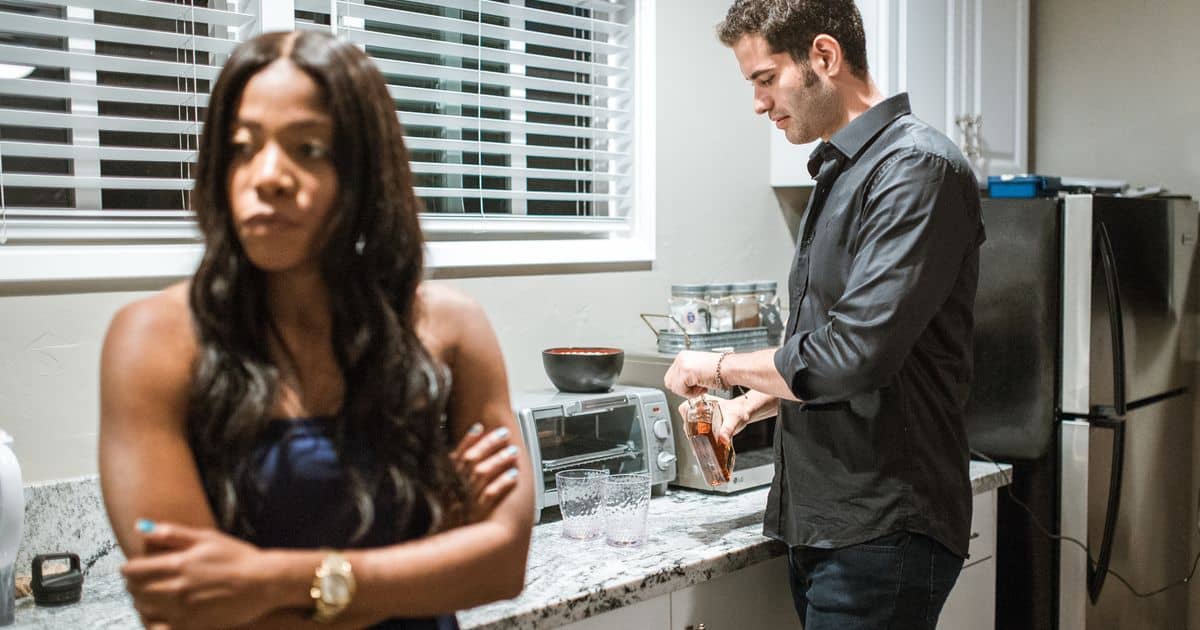
How important is sex in a relationship? It matters exactly as much as it matters to the two of you, and what matters most is what it means. For a lot of people, sex is how the body answers two very old questions: Are you there for me? Am I enough? A couple can be happy with very little sex if both of them truly agree, but a mismatch that nobody can talk about will slowly wear the connection away.
If you are reading this at eleven at night, I doubt you are asking out of curiosity. Maybe you reached over in the dark and felt them go still. A hand moved gently off. I am so tired. Tomorrow, maybe. Or maybe you are the one who went still. Either way, you rolled onto your side and typed the question into your phone, hoping someone would tell you whether this is a big deal or whether you are overreacting.
I have been a couples therapist for seventeen years. You are not overreacting. And this is not the end of your relationship, either.
Why does sex matter so much in a relationship?
Resentment quietly building between you?
Talk it through with Figlet right now. Private, judgment free, built on 17 years of couples therapy.
The textbook answer is true as far as it goes. Sex can settle stress, and it floods the body with bonding chemistry like oxytocin, which is part of why couples who feel good about their sex life tend to feel better about the relationship as a whole.
But that is not why it hurts. It hurts because sex in a long relationship stops being just sex. It gets wrapped in the entire emotional history of your bond. I tell couples that sex is a report card. It tells you what is happening emotionally between two people.
Attachment science tells us adult partners function as each other’s primary regulators. Your brain treats your partner the way a small child’s brain treats a parent. So when you reach and they turn away, your body does not register a difference in libido. It registers a no to the second question. Am I enough for you? No. The brain processes that kind of rejection in the same pain centres as a physical injury. On the savanna, if the one you depended on went silent, you died. That is the alarm going off in your chest. Rejection is not a thought. It is a body event.
How often do couples actually have sex?
There is no normal number, and I would be wary of anyone who sells you one. What we do have is trend data. Jean Twenge and colleagues at San Diego State, publishing in Archives of Sexual Behavior, found that American adults were having sex about nine fewer times a year in the early 2010s than in the late 1990s, and married or cohabiting adults about sixteen fewer times a year than in the early 2000s. A sexless marriage is usually defined as fewer than ten times a year.
Clinically, the number matters far less than the weight it carries. I have worked with couples who have sex once a month and feel deeply connected, and couples who have sex weekly and feel desperately alone. And if the two of you have been trying to solve this by negotiating frequency (twice a week, once a week, is that enough), stop. Negotiating frequency turns intimacy into a transaction, and the human nervous system does not get aroused by transactions.
Can a relationship survive without sex?
Yes, if both people genuinely agree that it is not what holds them together. Some couples arrive there honestly and stay close through touch and a shared life.
The version that does not survive well is the one where one person aches and the other braces, and nobody says a word. People stay in marriages like that for decades. The question is how. What you often end up with is two people running a very efficient household together, coordinating schedules and showing up at family dinners, while both feel a quiet ache they have stopped naming. That hollowness does not stay neutral. It moves in a direction. I have written about where it tends to go in how long a marriage can last without intimacy.
What if one of us wants it more than the other?
That is close to universal. Most long term couples have some degree of mismatch, and the mismatch is not the problem. The problem is what the two of you do with it.
It helps to know that desire runs in two modes. Emily Nagoski and others have shown that spontaneous desire seems to appear out of nowhere, while responsive desire emerges in response to closeness and arousal, not before it. Responsive desire is far more common than most people realize, especially in long relationships. If one of you is waiting to feel like it before anything happens, you may be waiting for a kind of desire that body was never going to deliver on its own.
In my practice I call the partner reaching for more sex the Relentless Lover. For a lot of Relentless Lovers, sex is where they feel most sure the connection is intact, so a no lands as evidence they are not a priority. The partner with the lower drive I call the Reluctant Lover. When they feel pressure underneath the bid, their nervous system does not hear “my partner wants me.” It hears “I am failing them again.” In Empathi’s own research, 74.1% of the 6,159 couples where both partners completed the assessment were in this pursue and withdraw cycle.
Isn’t it usually the man who wants more?
That is the story the culture sold us: men are the relentless pursuers, women are the gatekeepers, every sitcom joke about headaches. In my office it is very often the opposite. The wife has been initiating for years, and the husband is the one who is tired, on his phone, gone quiet.
When a man pulls back, it is rarely that he stopped finding his partner attractive. Sex with the person he loves most, whose disappointment could crush him, is sex with everything on the line. His withdrawal is often the presence of a shame so loud he cannot hear his own body over it. I go deeper on that side in when your husband doesn’t want you sexually.
Why does every no feel like a verdict?
Because you are in what I call the Waltz of Pain, and the bedroom version is the fastest, most brutal version there is. You feel unwanted, so you reach, or hint, or keep score. Your partner feels pressured and inadequate, so they stiffen or make an excuse. You feel rejected and go cold. They pull back further. Every bid becomes a test. Every no becomes a verdict. Every yes given out of guilt builds a low grade resentment that shows up three weeks later as another quiet no.
The one saying no is almost never withholding. They are protecting. To a partner who has been pulling back, your reaching lands as a performance review they are about to fail. Again. Neither of you is the villain. The dance is.
It happens in my marriage too
I do not write this from the safety of the therapist’s chair. My wife Teale and I are both couples therapists, and we have been open on our podcast that she is often the pursuer for physical intimacy in our marriage, and I am often the one who contracts. The more important she became to me, the more we became family to each other, the more my libido contracted. I had to admit to her, in our own therapy work, that sexual intimacy with someone I love this deeply is genuinely scary for me. I have my own long running story about not being enough. When sex became tied to the emotional survival of the person I love most, my body flinched.
I remember sitting on our own therapist’s couch with Teale. Two expert couples therapists, feeling shy and nervous. If it can happen in that room, it can happen in yours. It does not make you broken. It makes you a mammal with a history.
When is it a medical issue?
Sometimes the body piece is real. Hormonal shifts, postpartum recovery, perimenopause, medication side effects, depression, pain during sex, erection difficulties and unhealed sexual trauma all matter. If desire changed suddenly, or sex hurts, talk to your doctor first. But even when the physical or historical piece is real, the relational field around it either helps a person move through it or locks them further in.
And one line I hold firmly: if there is violence, threats, pressure or force around sex, someone blocking the exits, control of your money or your phone, or stalking, that is not a desire problem and it is not a dance. Get help today. The National Domestic Violence Hotline is 1-800-799-7233.
How do we talk about it, and what do I say tonight?
Not “you never want me.” Not “it has been three months.” Those are prosecution. Stop telling the story of what they will not do, and tell the experience of what it is like inside you. Tonight, say this, and nothing after it:
“When we do not touch, my chest goes tight and I feel completely alone. I miss you. And I am scared we are losing each other.”
No but. No “so can we.” You are not asking for anything. You are showing your partner the frightened animal under the score keeping. Then put your hand on their back with no agenda at all. Touch that goes nowhere teaches two nervous systems that contact is safe again.
If you are the one who wants it less
Your partner’s reaching is not a chore assignment. It is a wobbly, desperate question about whether they still matter to you. You do not have to have sex you do not want. You do have to see the broken bone in their chest. Replace “I am just tired,” which tells them nothing and leaves them to fill the gap with their worst fear, with something true: “I want to want you, and something has been in the way. It is not that I do not love you.” Say that once and watch what happens to the room.
Where to go from here
If the two of you are already stuck arguing about frequency, read how to deal with mismatched libidos. If it has been months or years and the bed has become a no man’s land, start with what to do in a sexless marriage. The bedroom is not where this gets solved. The bedroom is where it shows up.
If you want help with the words before you say them, that is why I built Figlet. It is a coaching tool, not therapy. Tell it what happened the last time one of you reached and what was said afterwards, and it will show you the pattern you are both in and give you one line to say. It is free to start tonight.
Frequently asked questions
Can a relationship last without sex?
Yes, when both partners genuinely agree that sex is not what holds them together and they stay close in other ways. When one partner wants it and the other does not, and it cannot be talked about, the relationship may last on paper while the closeness drains out of it. The absence of sex is not a verdict. It is a signal worth listening to.
How often does a man need sex?
There is no number that applies to men as a group, and the stereotype that men always want more does real damage. In my office, the husband is very often the partner with less desire. The better question for any partner is what sex means to them: for many people it is the place they feel most chosen, and that need deserves to be spoken plainly rather than counted.
Can lack of sex destroy a relationship?
It can, but it is rarely the missing sex itself. What kills relationships is the absence of curiosity about why the sex went missing, and the Waltz of Pain that grows in the silence. Couples who can talk honestly about the dance underneath the shutdown almost always find their way back.
Keep Reading



Resentment quietly building between you?
Figlet is relationship coaching built on 17 years of couples therapy. Talk through what is happening the moment it matters, get a clear next step, and stop circling the same fight. Private, judgment free, ready whenever you are.
Free to start. No credit card needed.
Figs O'Sullivan
Founder · EFT couples therapist
“What I would tell you at 10pm, if I could.”